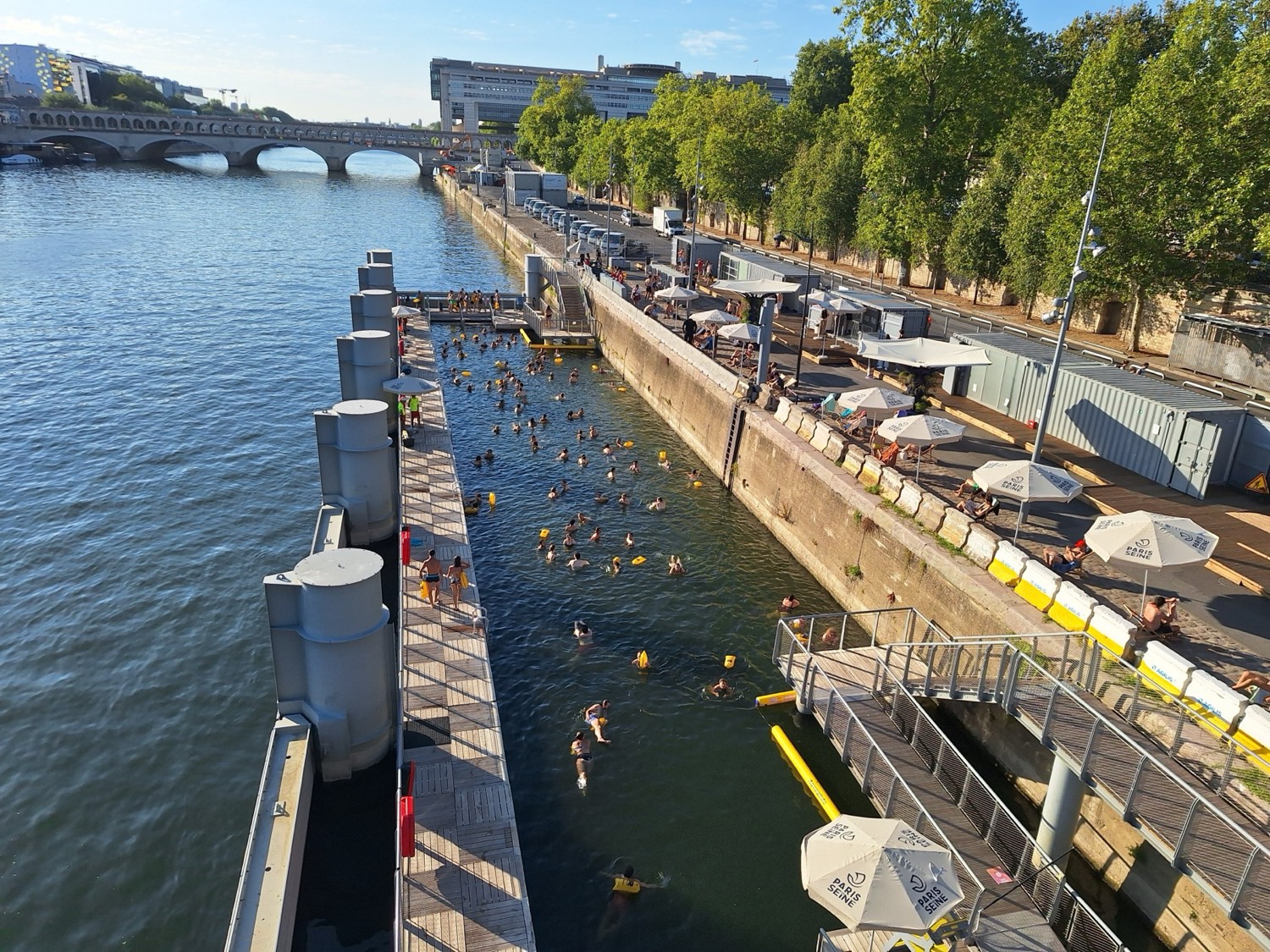
While we know our grandparents swam in them, today dipping even a toe into the water (mostly rivers, but also lakes and seas) that flows through or laps at our cities is, for many, an act of faith bordering on mysticism. This is due to a decades-long process of collective brainwashing that has convinced us deep down that swimming in the Thames, the Seine, the Tiber, or the East River is equivalent to bathing in sewage, with the added risk of emerging from the water like the three-eyed fish from The Simpsons.
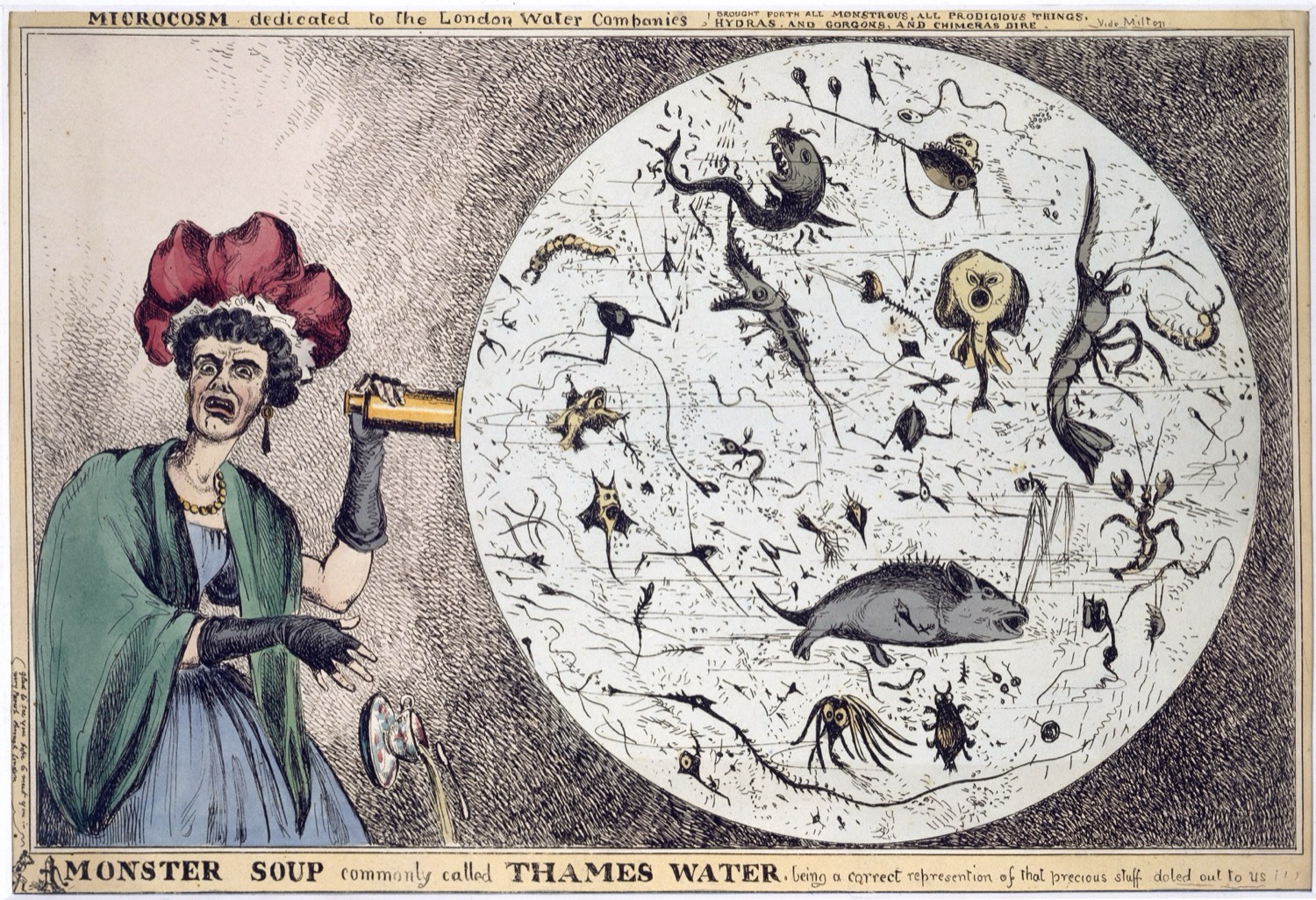
This now-atavistic phobia has a precise birth date: in 1828, the English engraver William Heath depicted an elegant, horrified London woman dropping her teacup while looking at a drop of Thames water under a microscope. The work was titled Monster Soup and transformed the river water into a rave party of demonic creatures.
A century and a half later, pop culture hammered the final nail into the coffin with Blinky, the aforementioned three-eyed fish.
These images became the perfect alibi. Public administrations, all too happy to indulge this psychosis and push swimmers toward the reassuring and expensive chlorinated waters of swimming pools, were able to continue using rivers as open-air sewers. The trouble with prejudice, however, is that it erases historical memory. We have simply forgotten that until the mid-20th century, swimming in rivers was the absolute norm in Europe. Parisians dove in en masse from the floating Bains Deligny pool, and Romans spent their summers on the Ciriola barge, the floating bathing establishment moored under Castel Sant'Angelo until a fire destroyed it in 1970.
Urban rivers, city seas, and lakes were free blue spaces used by the population. They were places for socialisation, urban identity, and spots where one could learn to swim for free. Then we poisoned the water and became so frightened of what we had done that we stopped even looking at it, losing one of our deepest connections to the ecosystem and the environment in which we live.

What "swimmable" means
When a European authority decrees that water is "swimmable," it is not expressing an aesthetic opinion on its colour, debris, or clarity. It is applying pure pathogen bureaucracy, based on Annex I of the European Directive 2006/7/EC.
Biologists look for two specific indicators: Escherichia coli and intestinal enterococci. They are not necessarily the ones that will kill you, but they are the smoke that signals the presence of a fire. Their presence certifies that fecal matter, i.e., sewage, has reached that water. The limit set to define water as "excellent" hides what seems to be an apparent regulatory paradox: the law allows 500 colony-forming units (CFU) per 100 millilitres in inland waters (rivers and lakes), but tolerates exactly half that, only 250, in coastal waters.
Why this disparity? It is not a "discount" given to rivers to make them artificially swimmable, but marine biology. As numerous scientific articles on the subject explain in detail, and as the World Health Organization takes into account—keeping coastal and fresh waters separate even in the titles of its bathing water guidelines—the bacterial die-off rate in the sea is dizzying. High salinity combined with osmotic stress on cell walls and intense UV exposure without the filter of coastal vegetation kills fecal bacteria in record time.
Consequently, if biologists detect 250 surviving E. coli in saltwater, it means the amount of pollutants coming from sewers is significant and very recent, and carries with it an intact load of much more resistant viruses and protozoa. In the fresh, protected water of rivers and lakes, the same indicator bacteria happily survive longer. The directive raises the threshold for freshwater precisely to align it with the actual human epidemiological risk: 500 bacteria in a river are equivalent, in terms of infection danger, to 250 bacteria in the sea.
There is a fundamental detail that diminishes the utility of real-time monitoring: to grow these colonies on a plate (according to strict ISO 9308 and 7899 standards), the bacteria must remain in incubation for 24-48 hours. Therefore, when a sign or an app tells you that the water is clean "today," it is scientifically telling you what the water was like two days ago, which in our case corresponds to a geological era. We personally happened to participate in a race in Liguria (Italy), though we won't say with which organiser, shortly after a downpour. The day before the race, there was a swimming ban due to the presence of E. coli. This ban was lifted on the day of the race, which took place regularly. The same swimming ban was reinstated the day after the race. Now that you know the data reflects a condition from 24-48 hours prior, you will easily understand how the result of the race was that about 300 out of 600 participants had fever, diarrhoea, and vomiting for a week (and the organiser just shrugged).
The European miracle: a lesson for the rest of the world
Yet, in the midst of an environmental and climatic degradation picture that tends to worsen, and net of these local distortions, it is intellectually honest to recognise a historical fact: the European Union has done a great political and infrastructural job. If the world is gradually returning to reclaim its open waters today, the credit also goes to pioneering legislation.
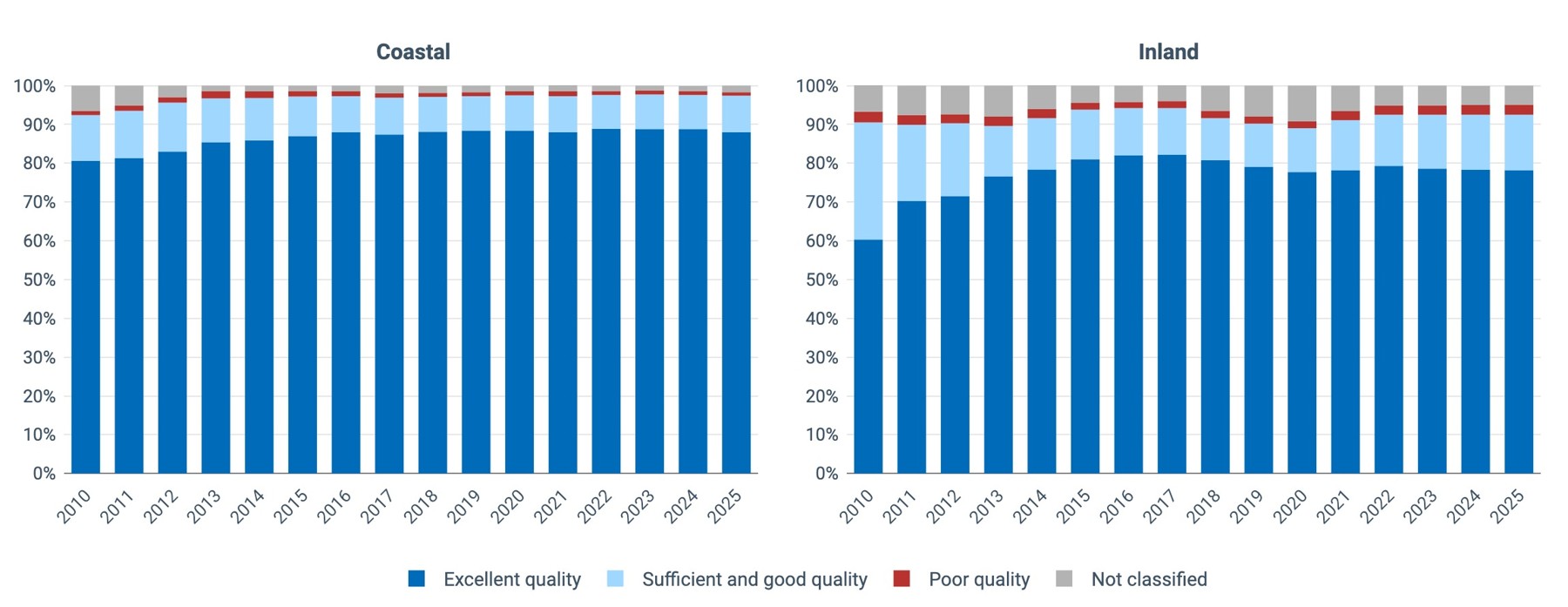
As certified by the latest report by the European Environment Agency (EEA) on 2025 data, the quality of bathing water in Europe has reached levels that the rest of the planet can only envy. Out of nearly 22,000 monitored sites including coasts, lakes, and rivers, 85% were classified as "excellent," and a stratospheric 96% meet the minimum legal requirements. This is not a lucky climatic accident: it is the result of decades of strict directives (from the Bathing Water Directive onwards) and colossal investments to curb and treat urban sewage. Europe has shown governments all over the world that degradation is not an irreversible destiny: waters devastated by the industrial boom of the 20th century can be healed, tracing a route to follow.
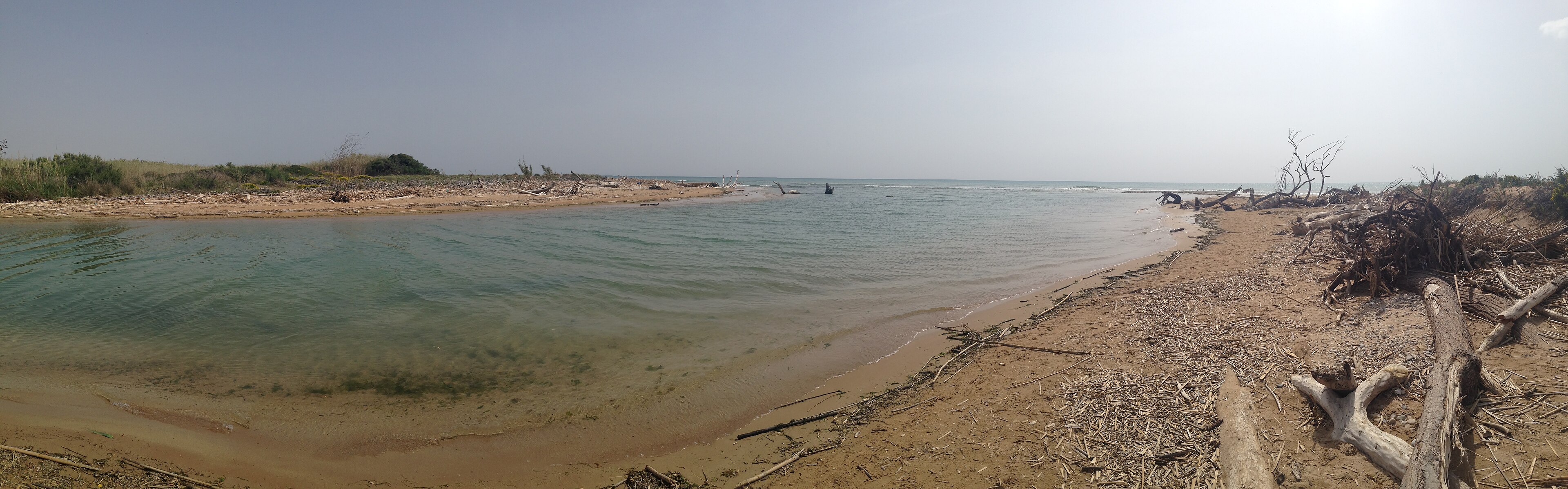
The line does not separate the river from the sea. It separates dry from wet.
The most naive mistake we can make is to believe that the sea is a self-cleaning deity and the river a muddy demon by nature. The truth is contained in independent monitoring data from four different continents.
In Italy, the 2026 final report of Goletta Verde and Goletta dei laghi counts 391 samplings in nineteen regions. Far from river mouths and sewage outlets, the sea defends itself very well: 15% of samples are over the limits. But at the 188 mouths of rivers, canals, and streams that flow into the sea or lakes, the rate of illegal samples jumps to 54%.
In California, marine biologists at Heal the Bay certify 91% of beaches between Washington and Tijuana with an "A" or "B" (the highest grades). However, after a heavy downpour, the same ocean beaches plummet to the bottom of the rankings, invaded by bacteria. In the United Kingdom, storm overflows (direct sewage discharges) decreased by 35% in 2025. A miracle of British sewage engineering? No. As the Environment Agency itself had to reluctantly admit in its bulletin, it simply rained much less than the previous year.
The demarcation line of bacterial filth is not so much between fresh and saltwater (even though, as we said, saltwater has a greater capacity to eliminate some bacteria), but above all between dry and rainy weather. Obviously, the impermeable concrete of our streets bears a good deal of responsibility for this, as it cannot absorb storms, saturating combined sewers and causing urban sewage to overflow downstream. A dry river, under a properly functioning treatment plant, is infinitely cleaner than the sea in Barcelona or Palermo the morning after a cloudburst.
The ultimate test: a revolutionary act
There are states that prefer to pay: Italy had paid Brussels 210,554,096 euros in fines as of December 31, 2024, all for a single conviction regarding urban wastewater treatment, just to avoid bringing its treatment plants up to standard. And then there are those who have decided to reverse the current (pardon the pun).
As we have analysed in depth in our dedicated investigation, reclaiming urban blue spaces is a revolutionary act. Returning to swim in rivers means breaking a taboo and taking back a public space that institutions had abandoned to industrial degradation and sewers.
Paris, during the 2024 Olympics, suffered the merciless irony of the planet for the continuous postponements of the Triathlon and open water swimming races. But France made a monumental political gesture: it allocated and spent 1.4 billion euros, digging massive underground cathedrals (like the Austerlitz basin) to store rainwater. The results, while imperfect, should be weighed against the volumes: in August 2026, the Seine hosted 216,000 ordinary swimmers at its three urban sites. They opened and closed day by day, following bacteriological surveys. This is the new paradigm: one does not wait for the miraculous purity of holy water, but measures the ecosystem scientifically and lives with it safely.
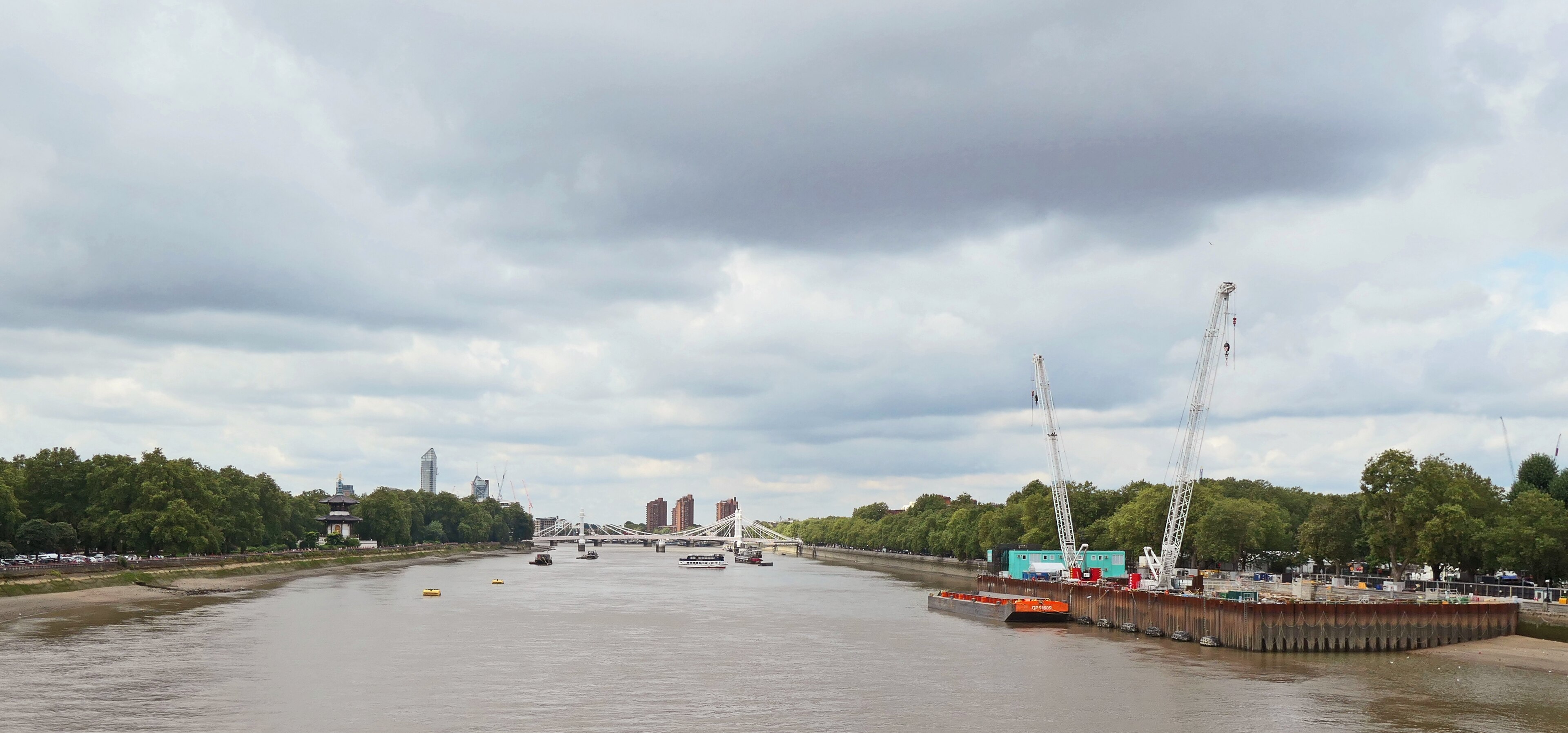
Today, metropolises are reconquering what was theirs. In London, the Thames (declared "biologically dead" in 1957) now hosts 115 species of fish. While waiting for the massive new Tideway collector to put an end to sewage discharges, Londoners swim strictly all year round in the icy open waters of the Royal Docks or the ponds of Hampstead Heath. In Basel and Zurich, throwing oneself into the current of the Rhine or the Limmat is simply the normality with which the Swiss return home from work in the warmer months. In Vienna, the City guarantees its citizens access to 63 kilometres of public and free swimmable riverbank along the Danube.
And in Chicago, in 2025, 263 pioneers in caps and goggles dove in for the first official race after ninety-eight years in a river that, a century earlier, had been literally made to flow backwards to prevent its sewage from poisoning drinking water wells. This year's edition was swum on September 20, with the starting field expanded from 500 to 750 entrants.
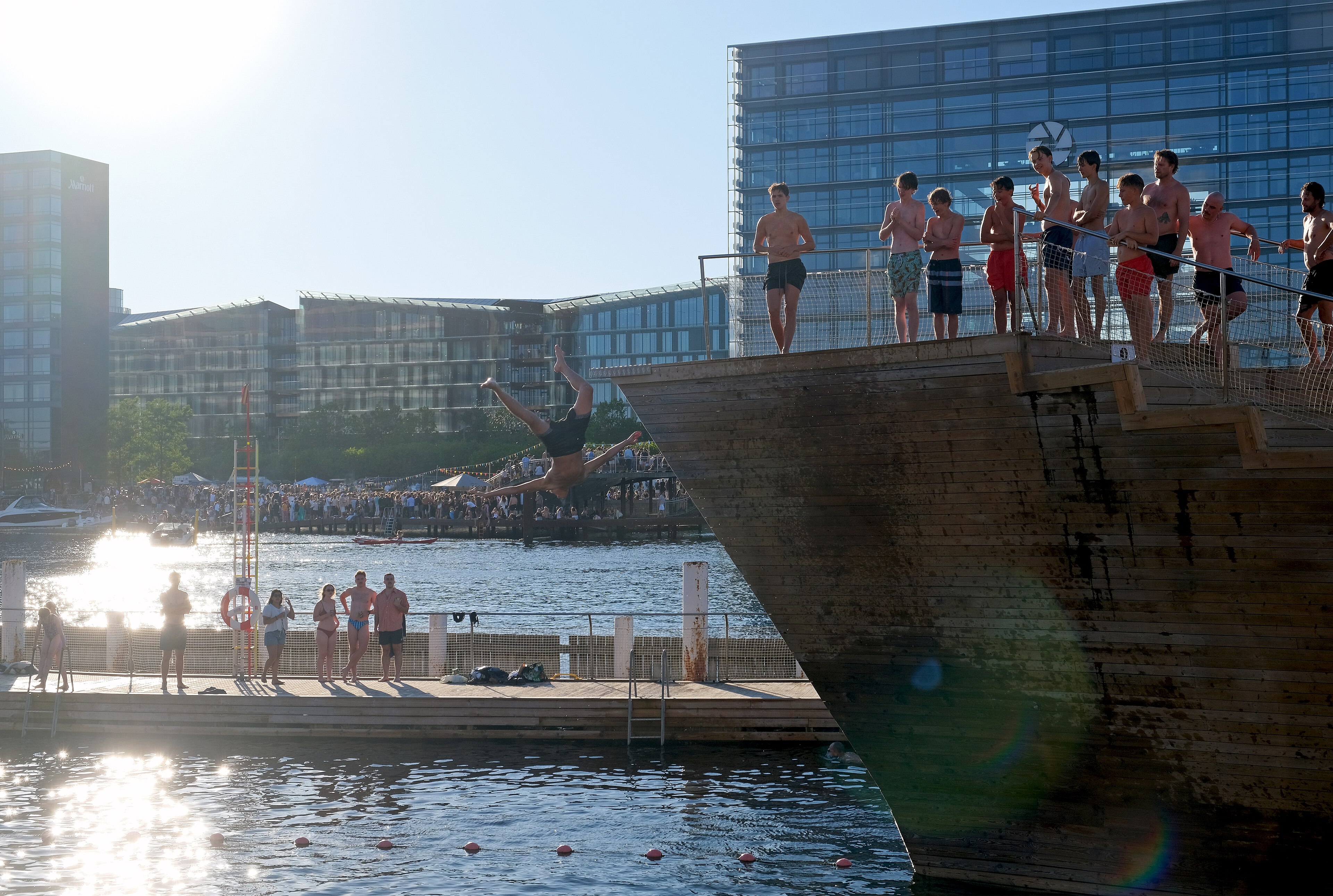
These are not armchair victories. They are part of an awareness, now codified in the global Swimmable Cities movement, which unites administrators and activists in 121 cities around the world with a firm belief: zero risk in nature does not exist. The goal is not to sterilise rivers like chlorinated lanes, but to manage and communicate them with transparency, to return urban blue spaces to the citizenry. Copenhagen has been doing this for years, using networks of smart sensors to turn the traffic lights of its immense harbour baths on and off, safely welcoming nearly half a million bathers per season.
And then there is the city that is made of water, yet you cannot enter the water. In Venice, the Urban Police and Safety Regulations prohibit swimming along all the canals of the historic centre, and the cost is well known to the two tourists who, on September 11, 2025, dove into the Grand Canal in front of the San Vidal gondola station: three hundred and fifty euros in fines each, another hundred for the removal order, and a forty-eight-hour ban on setting foot in the city again. The ban, however, does not stem only from vaporetto traffic. The historic centre does not have a sewer system as understood elsewhere: it works with a "substitute service" made of dispersed systems and tides that wash the canals twice a day, and work to connect the city to the large mainland treatment plants has only recently begun. The general manager of the company that manages the water, Veritas, stated clearly that "between twenty and thirty years" will be needed to finish the job.
To swim in Venice, you have to leave the city and go to the Lido, where there is the sea and where the sea is classified. That is where the race is swum.
Venice Open Water Lido di Venezia, 14 June 2026 — 200, 800, 1,850 and 3,500 mThose left behind: death by geography
If this is the portrait of Western metropolises that are reclaiming their banks, we must look at the other half of the map without making excuses. It is the half where state collapse turns water infrastructure into a real demographic weapon.
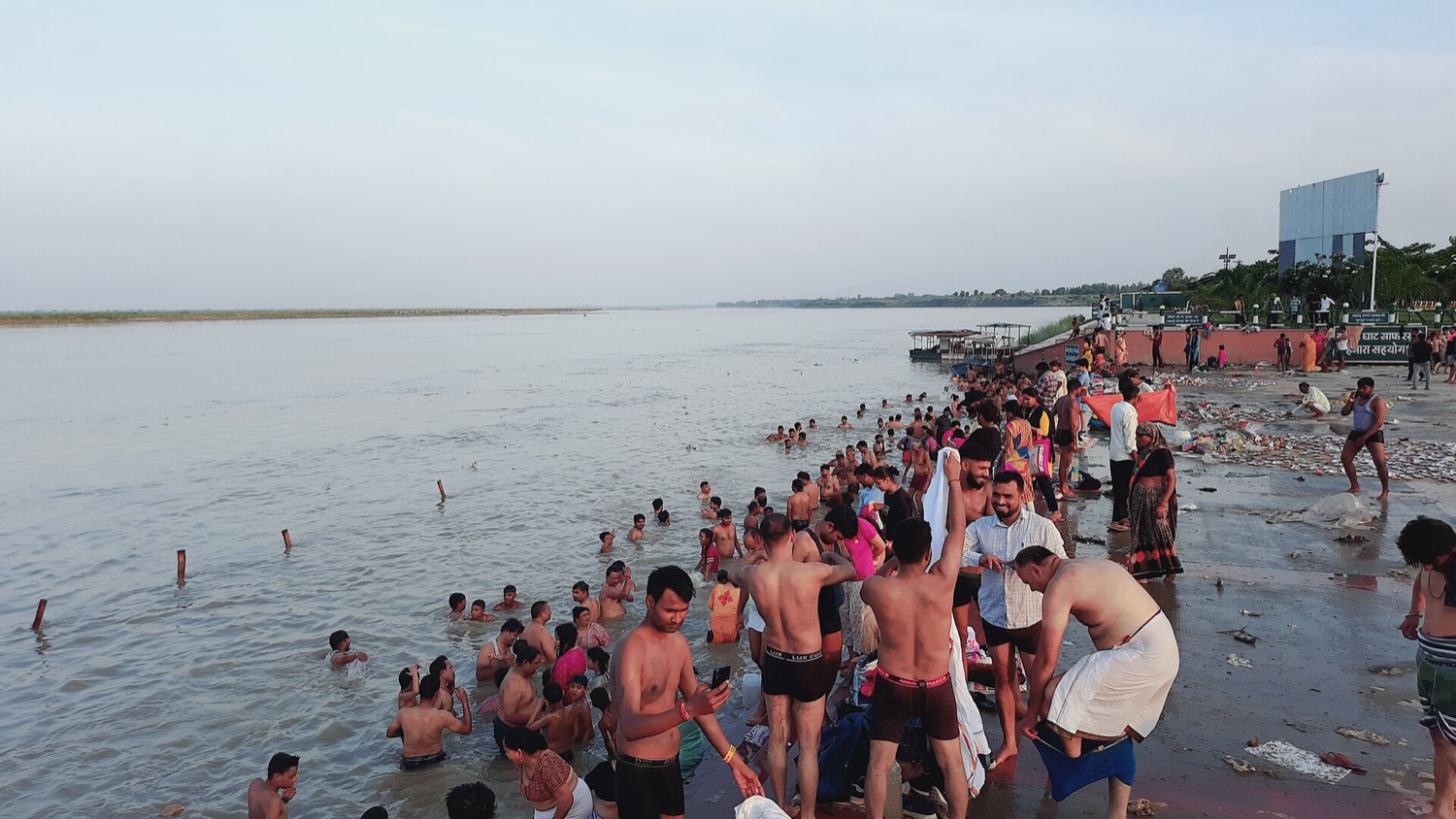
In India, the central government authority, the Central Pollution Control Board (CPCB), sets the maximum bacterial tolerance limit for "outdoor bathing" at 2,500 fecal coliforms per 100 ml. A parameter already much softer than First World standards. Yet, in 2026, the monthly bulletins of the Delhi Pollution Control Committee recorded horrifying peaks of 170,000 MPN/100 ml in the waters of the Yamuna near the ISBT bridge.
There is no romance in diving into an infected river megastructure that crosses a megalopolis of twenty million inhabitants.
It is precisely in these desolate scenarios that our environmental investigation inevitably converges with social drama. As we documented in our previous reportage, the swimming ban draws a line based on income and ethnicity. Where public urban waters are reduced to a toxic concentrate of E. coli, learning to swim becomes increasingly difficult for the less affluent segments of the population. Water ceases to be a free common good, and aquatic literacy becomes a private luxury, confined behind the gates and fees of country clubs or paid municipal pools. Those who do not have the money to pay for swimming lessons in a filtered pool lose the right to learn how to survive.
The next time a friend or a passerby tells you that they feel an intimate repulsion at the idea of swimming in the river, lake, or sea of their city, ask them, very practically, what was the last bacterial measurement they consulted on their local environmental agency's portal.
Nine times out of ten, you will realise they don't know. They don't have data in hand; they only have a prejudice. And it is precisely that disinterest, that bourgeois, sanitised, and resigned withdrawal from raw nature, that has allowed our open waters to be polluted by industries and administrations for decades, in general silence.
We prefer a secular and frontal approach. We look at the thermometers, we read the bacteriological samplings, we tighten our goggles, and, when the number allows it, we get into the water. Because a clean and accessible river in the centre of a metropolis is not a tourist diversion: it is the ultimate test to understand who the world we live in really belongs to.