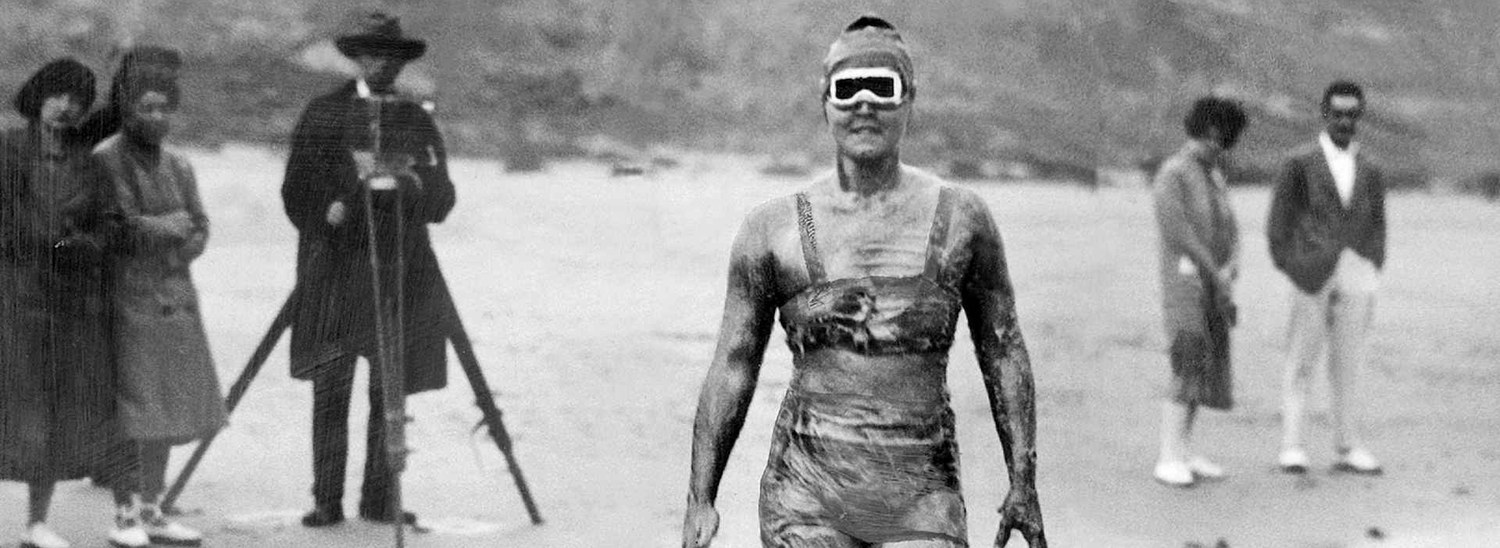
A few days ago, I went for a swim in the sea. After opening my bag on the beach and finding no goggles inside, I was struck by the fleeting memory of them lying out to dry and a shiver of annoyance. I checked my watch and realized I wouldn't have time to go back home to get them, or I would have to skip my workout. So, I decided to head into the water without them. "I'll just do a couple of kilometers. What could go wrong? We swam for centuries without goggles; I can manage half an hour."
With that bravado, I dove into what turned out to be half an hour of pure ocular agony. As I fumbled through the salt, with my conjunctivae on fire and the blurred vision of a presbyope, I started thinking about how much I loved my goggles (I've had the same pair for 10 years). And I thought of Mr. Malmsten, who designed them so perfectly in the 70s, and all those who preceded him over the centuries.
This article is for them: a journey to retrace the history of goggles and our vision underwater. A tribute dedicated to those who gave our corneas the superpower of refraction by placing a small air chamber between the eye and the ocean.
The Sicilian Coral Divers
As is well known, in water, the cornea does not refract light, so we see things blurred; we have had to live with this inconvenience for millennia. Around the web and in quite a few printed books, one often reads that the first to reject this sentence were the 14th-century Persian pearl divers, who supposedly used tortoise shells polished until translucent, tied on like goggles, and with these managed to fish for pearl oysters. Aside from the fact that I doubt they could see anything through them, the story would be beautiful, but I haven't been able to find any serious documentation, apart from mentions by mediocre bloggers and online goggle sellers. In The Book of the Pearl, the six-hundred-page work in which George Frederick Kunz in 1908 recorded everything known about pearl fishing, he doesn't name goggles even once; and when describing the equipment of Gulf divers, it mentions cotton soaked in oil in the ears and a tortoise-shell clip to close the nostrils. The divers would come back up, Kunz writes, "coughing to clear their eyes, ears, and mouths of salt water."

The first evidence we have in the West is a striking 1596 Flemish engraving by the master Johannes Stradanus, which depicts fishermen in Sicily free-diving deep to tear off red coral. The faces of the men emerging clearly show curved glass goggles, although they don't seem to have a strap to hold them. The Latin inscription leaves no room for ambiguity: "Coralium Siculus solers cautusque Specillo / Ante oculos fixo" ("The skillful and cautious Sicilian fishes for coral with a glass fixed before his eyes").
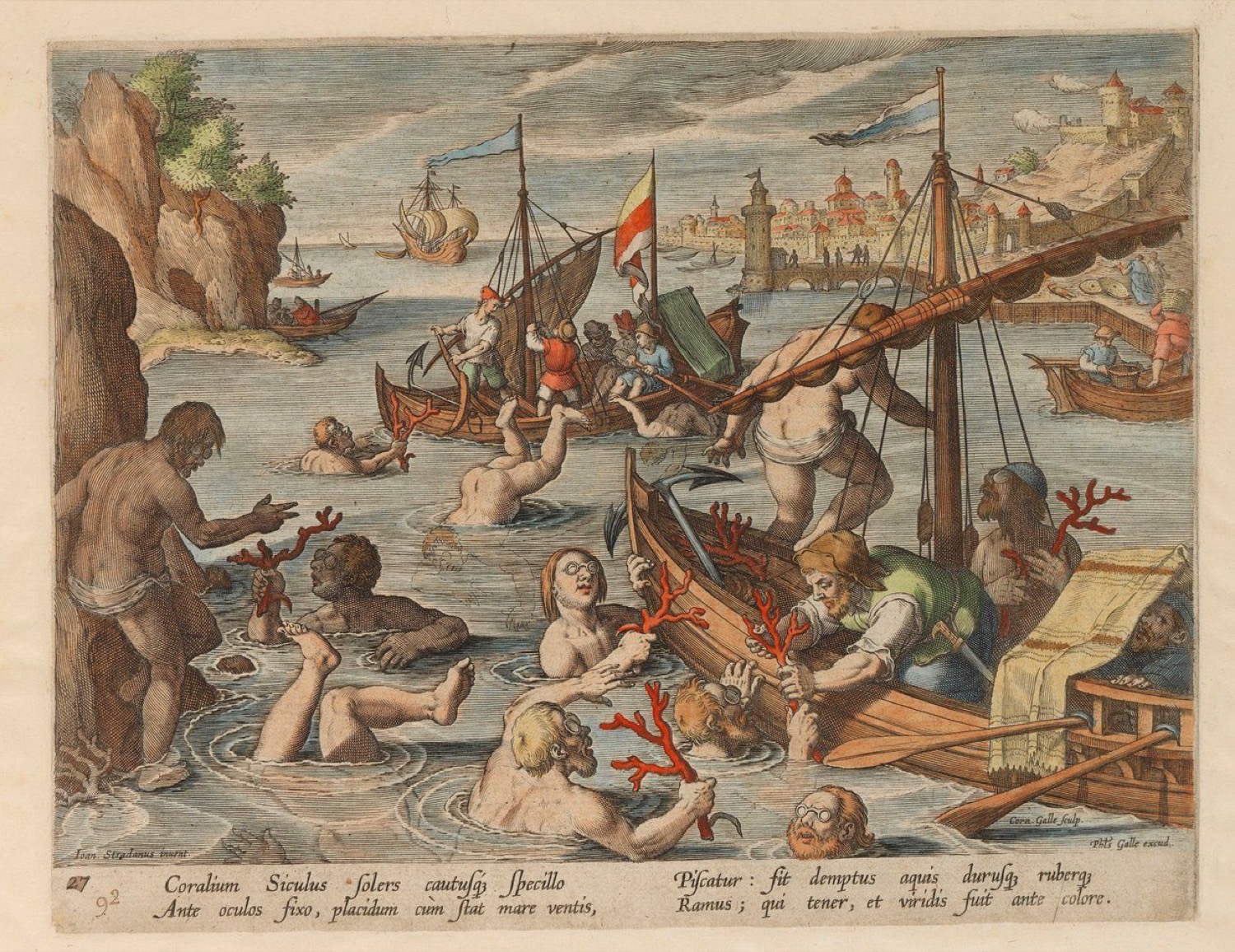
Then, it seems this tradition was lost and, in any case, did not spread to other cultural or geographical contexts. Europe returned to being blind in the water.
Mekurasagashi vs Isomegane
If we move to 17th-century China, we discover that the main obsession was dive time, while vision remained a painful matter of physiological adaptation. In 1637, the scientist Song Yingxing published the monumental encyclopedic treatise Tiangong Kaiwu, in which he described in detail the equipment of pearl fishermen. These men used an ingenious precursor to the snorkel: a curved tin tube applied over the mouth and nose to breathe through, held in place by tanned leather that wrapped around the ears and neck.
However, as the original text clarifies unequivocally, neither piece housed glass lenses: the tin was for breathing, the leather for keeping water out of the ears. The eyes remained completely exposed to the salt water. Chinese fishermen, accustomed to this ocular stress from early childhood, literally dove with the naked eye: the treatise specifies that their corneas were so acclimated that "in the water they can see the color of the water, they know where the sea dragons are, and they dare not approach" (入水能視水色,知蛟龍所在,則不敢侵犯). They didn't spot them in time: they knew where they were and steered clear. Without goggles, it doesn't surprise me that sharks easily became sea dragons.
Between the Philippines and Indonesia, we find the Bajau, a population of sea nomads. The Bajau carve goggles out of very hard mangrove wood, wedging bottle bottoms into them. With these tools, they descend beyond 20 meters. Millennia of amphibious life have modified their genome to the point that recent studies have shown that the Bajau possess a larger spleen to store oxygenated red blood cells and resist pressure. How long these tools have been in use, we do not know.

Far more disruptive and complex was the evolution of underwater vision in Japan. Here, the legendary Ama free-diving fisherwomen dove for almost 1,900 years relying on Sume (素目 - naked eye) and a technique called mekurasagashi (盲探し, literally "blind searching"). With their vision blurred and burning from the salt, these women operated by relying almost entirely on touch and a formidable spatial memory of the seabed. This millenary and precarious ecological balance broke suddenly in 1878 (the 10th year of the Meiji era), when the first goggles with wooden and later brass bodies and glass lenses, the so-called Isomegane, arrived in Mie Prefecture.
The impact of finally being able to see clearly was devastating. The Toba City government, which has been cataloging the trade for decades, writes it in a single line: "for the Ama, glass goggles brought a revolution in fishing." Too big: abalones (awabi) were coming up in such quantities that in many locations their use was banned for about twenty years. Even today, that efficiency is kept in check by strict rules: the sunbō, the measuring stick, has a 10.6 cm notch, and an abalone that fits through it in Mie Prefecture cannot be taken.
Readmitted at the beginning of the 20th century, goggles forced the Japanese to clash with a new enemy of vision: hydrostatic pressure. The first models were two separate lenses (swimming style). Then they moved to a single-lens mask, but by leaving the nose out, the trapped air was crushed by the water against the eyeballs, creating a painful "suction effect." To solve the problem without being able to blow through the nose, the Japanese invented an ingenious hydrodynamic marvel: they applied a small rubber bag (a sort of "airbag") to the side of the mask that, by compressing underwater, absorbed the external pressure, saving the eye capillaries. In the Toba museum display case, that model is still there, third from the right in the row of goggles arranged in order of evolution: the hitotsu-megane, single-lens, with the nose out and the rubber bag on the side.
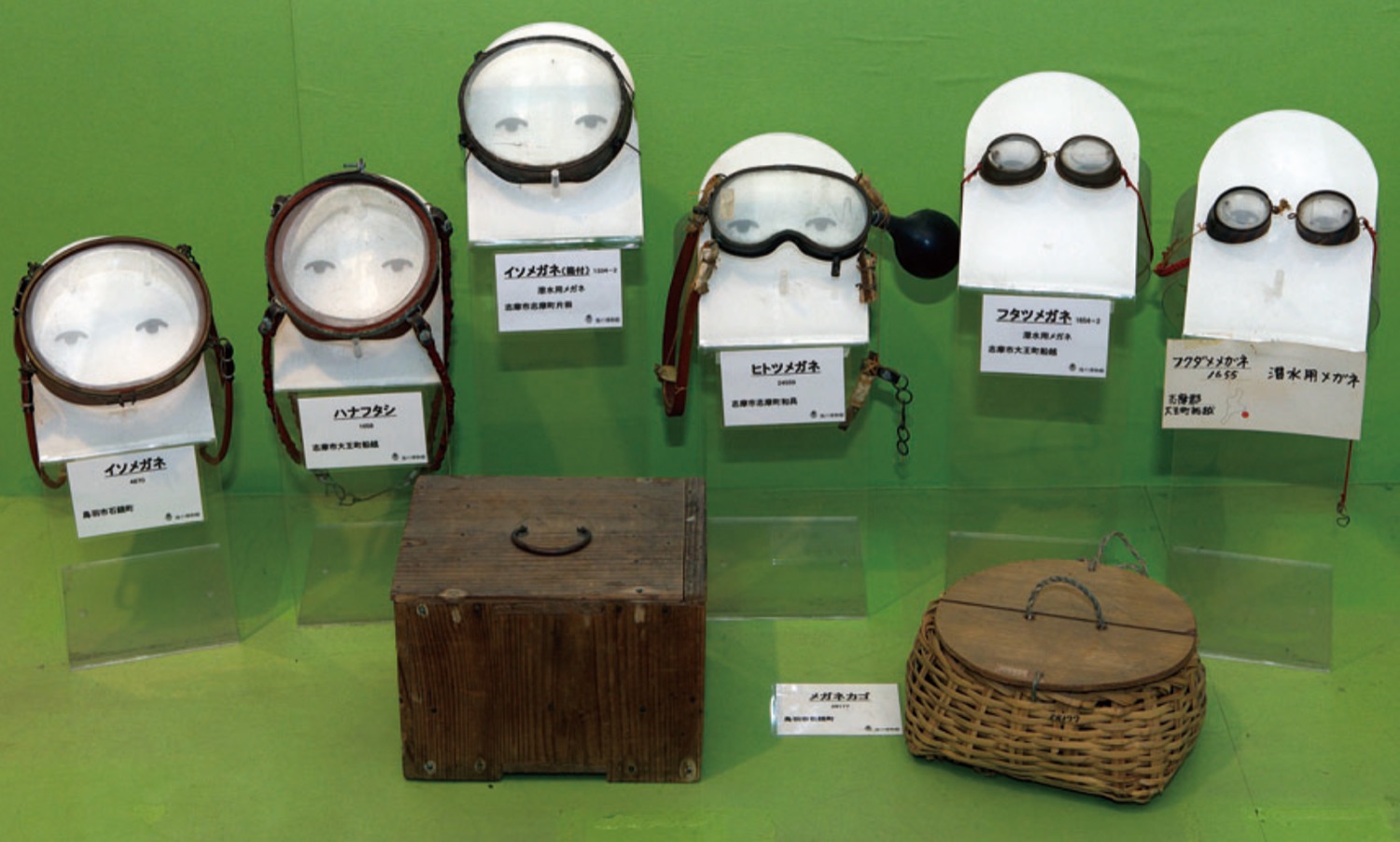
The epic of underwater vision then evolved by embracing folklore and regional needs. Kojima Takao, of Seijo University, who surveyed the Ama of Wajima on-site, notes that up there, on the Noto Peninsula, goggles have been used since the mid-Meiji era and that today they continue to prefer the two-lens model. With a consequence that says everything about the average age of these professionals: the version for presbyopia is prepared for them by the town opticians. And the tool has ended up counting as much as the boat: at the kishū-sai, the New Year's festival for the launch, the goggles and the ōbigane — the iron for detaching abalones — are placed on the kamidana, the household altar, like the objects that declare what that house lives on. Some leave them there all year round, outside of fishing season.
The Blind Century: From Matthew Webb to Mark Spitz (1875 - 1972)
Let's return to the West. Having lost the wisdom of the Sicilian coral divers, we had returned to not seeing in the sea. When in August 1875 the legendary Matthew Webb became the first man to swim across the English Channel, he did so by swimming breaststroke for 21 hours and 45 minutes with his eyes wide open in the salt water. He arrived in France almost blind, with his corneas burned by the salt. When Thomas Burgess (1911) and Gertrude Ederle (1926) repeated the feat, they wore motorcycle goggles sealed as best they could with paraffin.
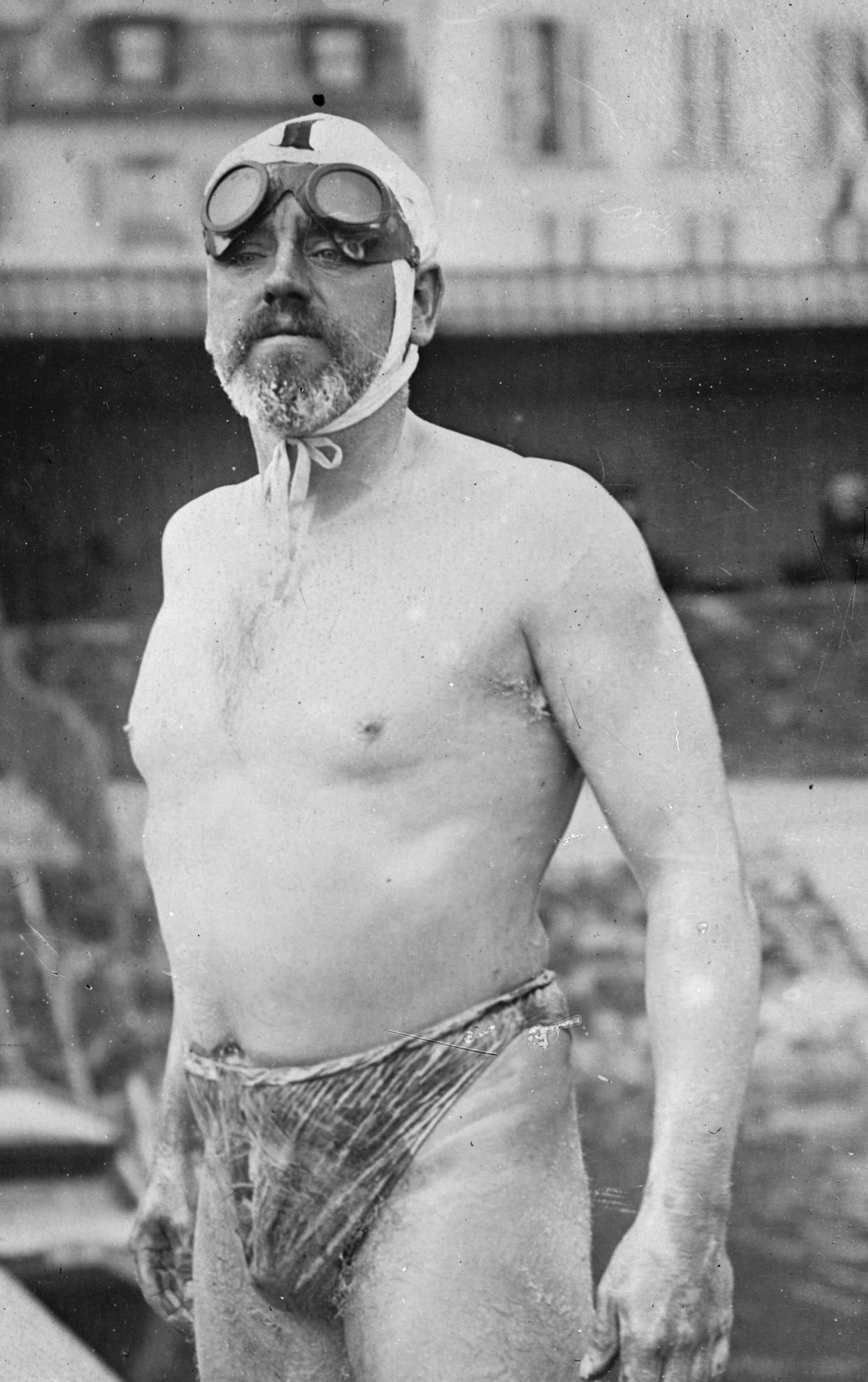
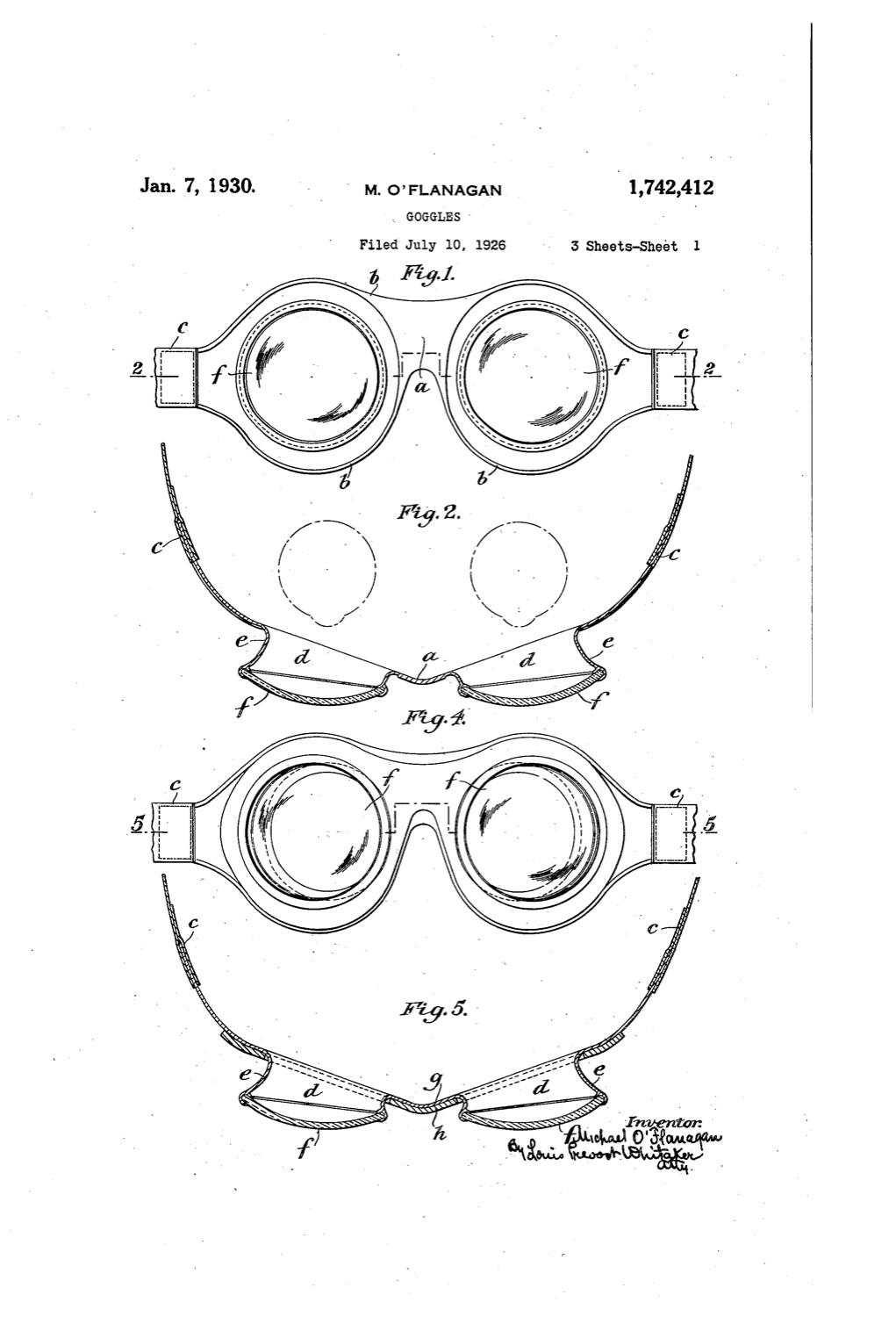
Only in 1926 did an Irish priest, Michael O'Flanagan, patent (US1742412A) the first true commercial rubber goggles. But they had a fatal problem: they didn't work at depth. Behind this patent, in reality, hides an extraordinary and polarizing figure: O'Flanagan was not a simple clergyman, but a fervent socialist and a radical republican, so much so that he became President of the Sinn Féin independence party in the 1930s. Dubbed the "rebel priest" and suspended from his ecclesiastical duties for his fierce activism and anti-establishment positions, he sold his goggles by mail order from his home in Ireland to ensure an income during the years the Church had sidelined him. He called them "the Seal's Eye", and advertised them in the Catholic Bulletin of July 1928. He wasn't a theorist: he was an open-water swimmer, and his habit of swimming at Mullaghmore is written in his memorial. A brilliant and restless mind who, between a fight for land redistribution and an independence campaign, found the time to patent goggles in the West and revolutionize sports and commercial underwater exploration.
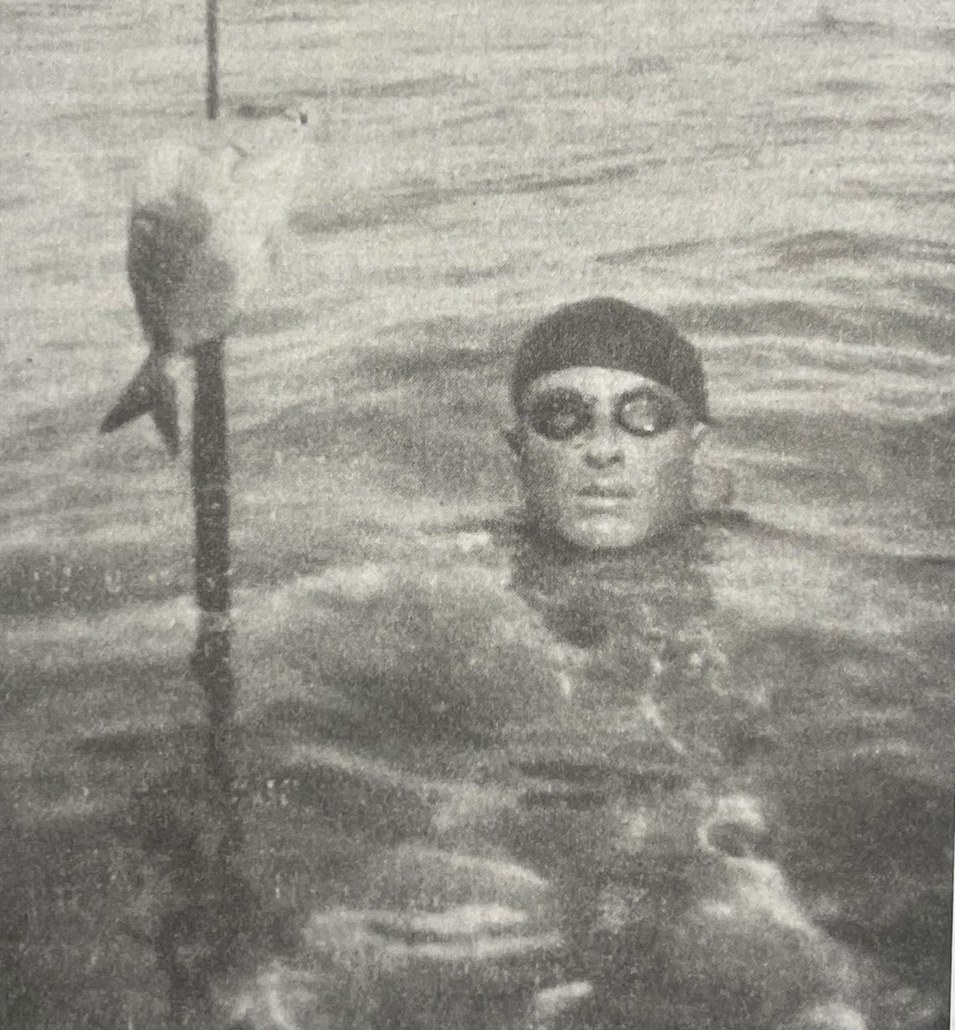
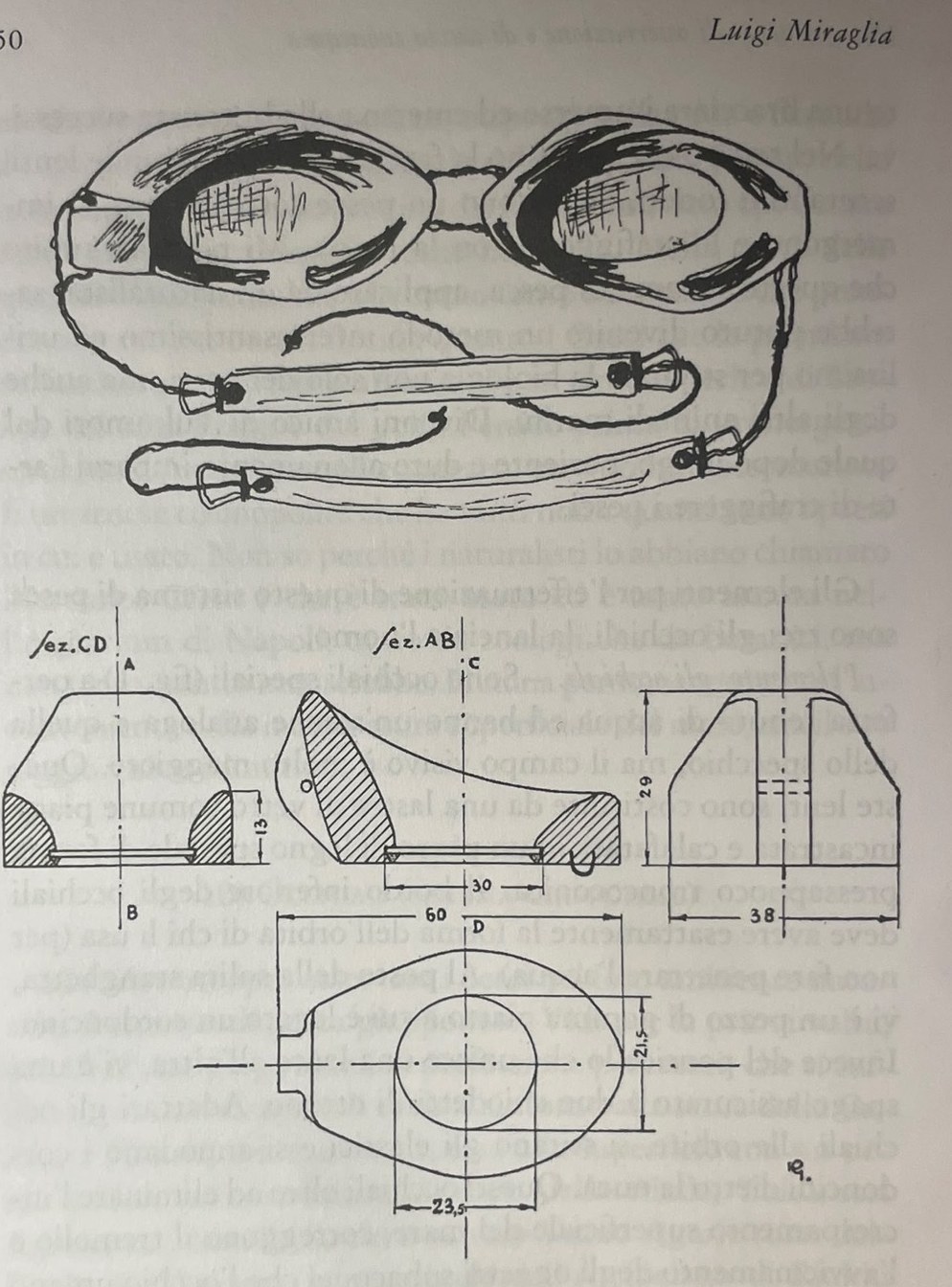
Through an extremely improbable path, Japanese goggles arrived in the Mediterranean. In 1932, at the Gaiola Shoal, off Posillipo, Luigi Miraglia — a naturalist, assistant at the Anton Dohrn Zoological Station, where he worked with the aquariums — stumbled upon three Japanese fishermen. The first, Tukumori, had arrived in Europe in the wake of a Dutchman from Java for the Barcelona International Exposition. Once the fair was over, he had sensed a business opportunity: Naples had a very rich fish market, and rockfish were worth gold. So, he called his brother Soghi and his uncle Tazuo Agarje, originally from Okinawa, to join him. Miraglia followed them for three fishing seasons, in '32, '33, and '34, aboard a Sorrento rowing and sailing boat, from the Gulfs of Naples and Salerno down to Sicily, hunting for sea bream and grouper. The Japanese wooden goggles, however, had the defect of being sucked into the eye sockets by hydrostatic pressure, and using them in deep free-diving became quite painful. We told the whole story of Miraglia, from the Japanese to Paraguay, here.
To find a definitive solution to this problem, we would have to wait for the end of the war, when the Italian Luigi Ferraro invented the Maschera Pinocchio (1952) for Cressi. By inserting the nose into the rubber, you could equalize the air and descend into the abyss without bursting your capillaries.
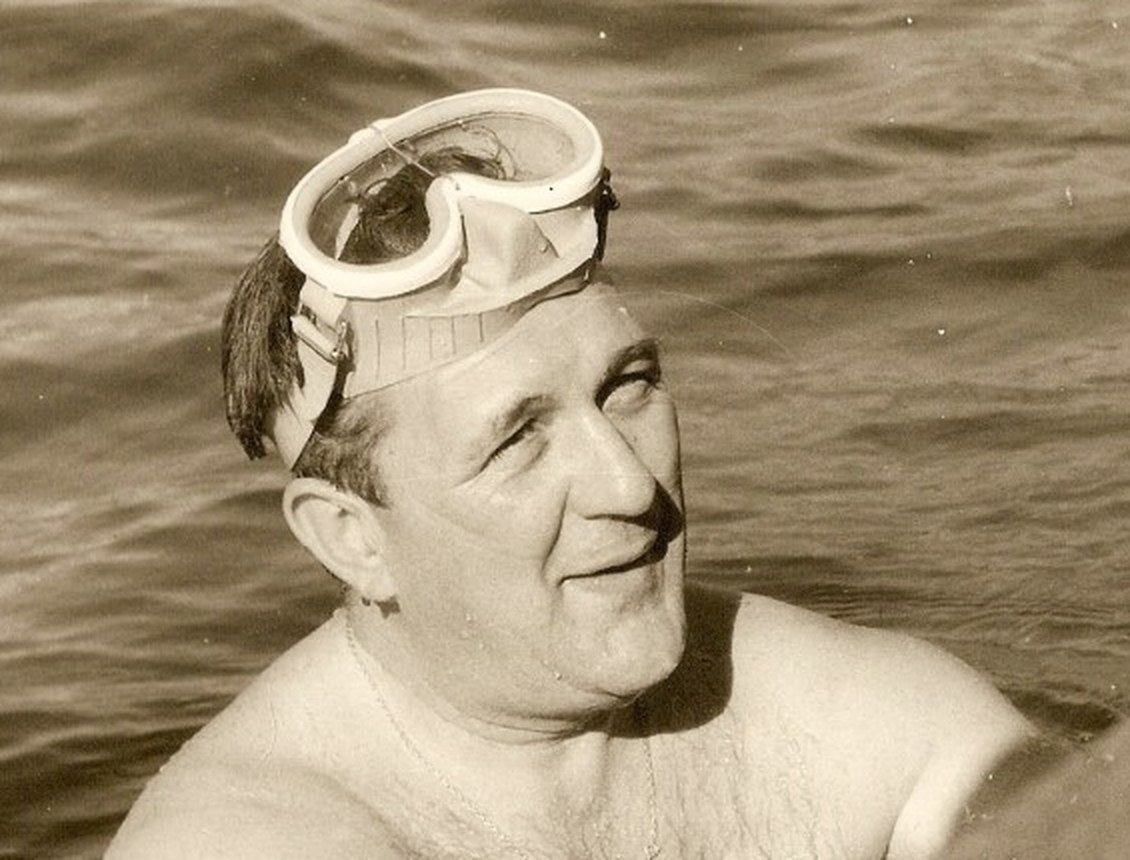
From this moment on, the stories of free-diving and swimming separate. Masks for free-divers, goggles for swimmers, even though throughout the 50s and 60s, Western swimmers continued to swim with inflamed eyes.
Think about it: at the 1972 Munich Olympics, the divine Mark Spitz won 7 gold medals and broke 7 world records while swimming completely without goggles.
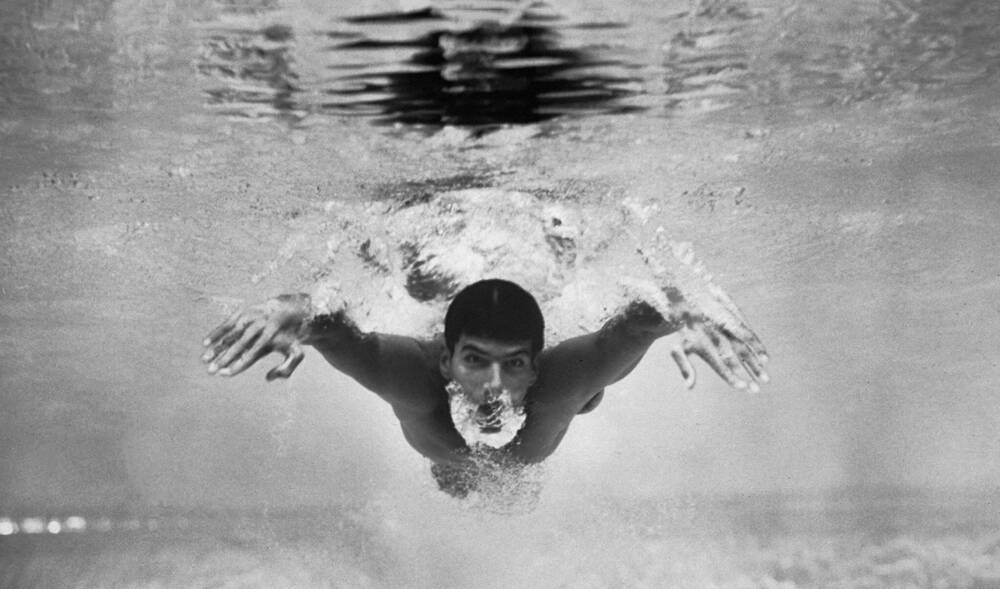
The DIY Era: Plastic Cups, Rubber Bands, and Red Eyes
Before the late 60s, swimming pools were a place of ocular torture. Those who swam competitively had to endure grueling workouts in water where chlorine caused measurable damage to the cornea. In 1983, two ophthalmologists examined fifty people before and immediately after a swim in a chlorinated pool: 68 percent saw halos and rainbows around lights — the sign of corneal edema — and 94 percent had erosions of the corneal epithelium, visible with fluorescein.
Out of desperation, in the mid-60s, swimmers became inventors. As documented in the historical archives of Anglo-Saxon swimming and the International Swimming Hall of Fame, the pioneers of vision in the pool started making homemade goggles using small plastic cups (often cut from packaging or repurposed from bottle caps) held tight to the face using simple tailor's elastic.
These DIY prototypes were ingenious but not very functional. Furthermore, they were considered a mere training tool, strictly forbidden or discouraged in competition due to the risk of them breaking or falling off during dives. But swimmers had to build them themselves because nothing existed on the market, at least in this part of the world.
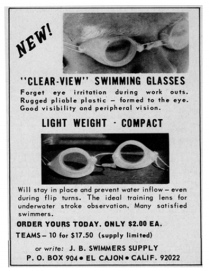
The Swans Record (1945) and the Godfrey "Revolution" (1969)
In reality, a commercial market already existed. The Japanese optical company Yamamoto Kogaku (today famous worldwide as Swans) had started producing the very first commercial celluloid goggles as early as 1945, created to help post-war fishing. In 1971, the company even launched the world's first lenses with an anti-fog treatment. However, in the West, these products struggled to gain a foothold among competition purists.
According to many online sources, the era of "cups and rubber bands" ended abruptly in 1969, thanks to a stroke of engineering genius by Tony Godfrey who, after experimenting with various materials, was the first to choose polycarbonate. Godfrey thus began producing the "Godfrey Goggles": the first goggles molded from very light, hydrodynamic, and unbreakable thermoplastic material, of which, however, despite research efforts, I have found no trace except on generic online blogs, always hitting third-hand sources that never cited the original source. On Google Patents, I found no trace of Godfrey. The mention of "Godfrey Goggles" exists exclusively in short, unverified snippets on British commercial sites and industry online magazines that, to fill space, practice compulsive copy-pasting. I'm not saying Tony Godfrey was never born. Probably, in the late 60s, an enterprising Briton named Godfrey really did injection-mold some plastic cups in his garage or a small local workshop, selling them to the swimmers in his county. But the modern industry has elevated him to a global "founding father" probably without any particular merit.
The official consecration of goggles in the pool arrived with the 1972 Olympics, when the Scotsman David Wilkie showed up at the Munich blocks wearing them (to protect himself from a fierce chlorine allergy, as he said himself) and took silver in the 200 breaststroke, in 2:23.67, a European record. The BBC records him as the first to have worn a cap and goggles together in competition. We don't know what brand Godfrey's goggles were; surely some type of goggle was starting to spread in those years.
What I consider the philosophical and absolute apotheosis of equipment materialized shortly after, in Sweden, in 1975.
Tommy Malmsten invents the "Swedes."
There are objects in the history of industry whose perfection is demonstrated in the brutal simplicity of the intuition. Think of the Bialetti coffee maker, the wooden clothespin, or a Thonet chair. They are pure objects, stripped of all useless trimmings. Simplified and, for this reason, perfect. A Malmsten goggle is composed of three elements: two hard, bare plastic lenses and a piece of string. For decades, generations of epigones have tried to improve this design without success. The invention of the famous Swedish goggles belongs to the Swedish national team coach Tommy Malmsten, who devised his famous design in the mid-70s. Legend has it that his invention was born to solve a medical problem: his top athlete, Ann-Sofi Roos, was allergic to the rubber and neoprene of the gaskets. Malmsten took two rigid plastic lenses, removed the gaskets entirely, and used a simple string for the nose: the Swedish Goggle, to be assembled by hand, was born.
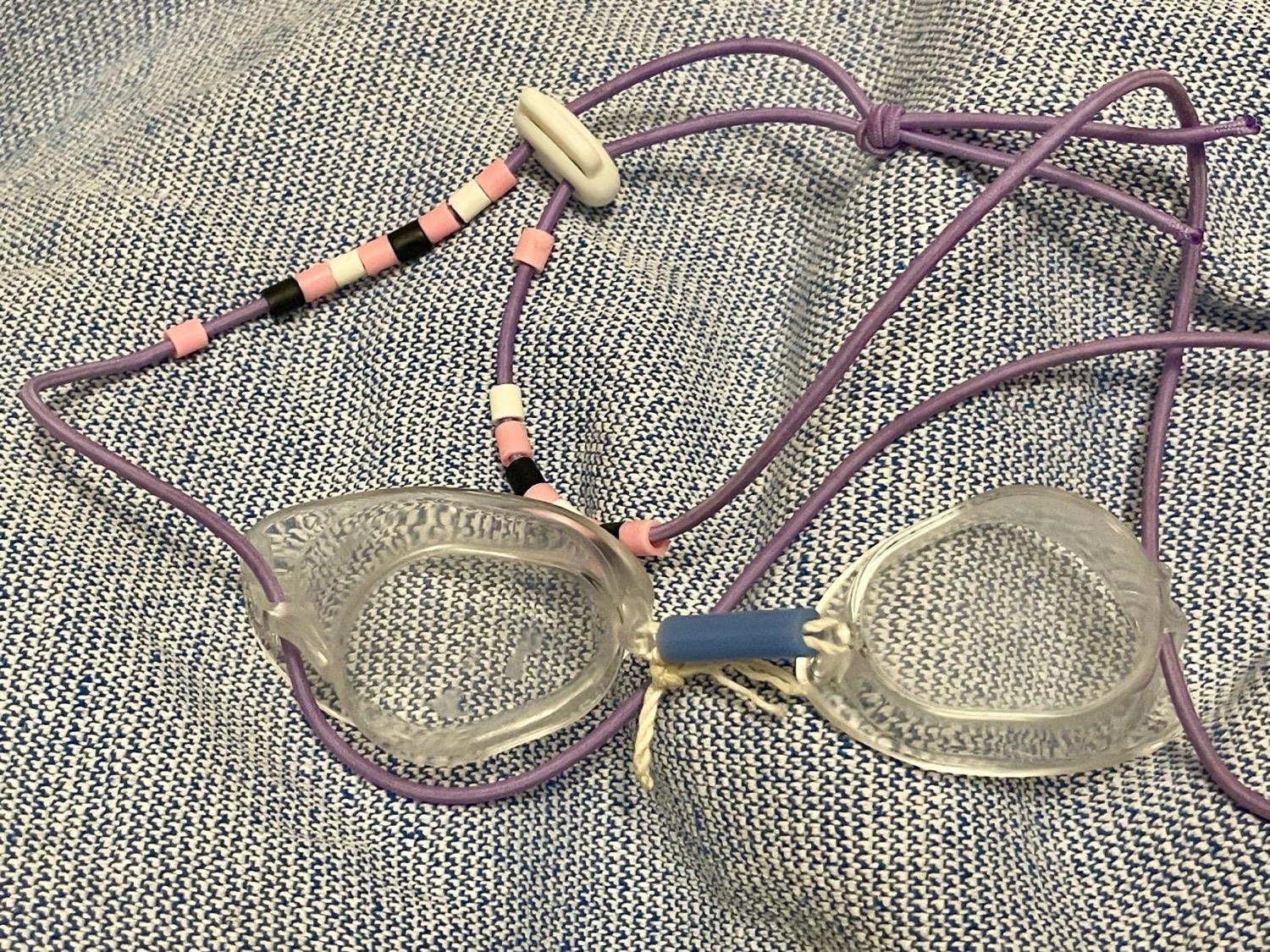
The full name is Monterbara Swedish Goggles. "Monterbara" means "to be assembled," and this is not just a word, but a rite of passage. You have to build your own equipment. That is why, once assembled and adapted to your skull and the exact distance of your eyes, those goggles become unique in the world and so comfortable that no goggle produced by a 3D scan will ever be able to match them with the same magnificent simplicity. Do they hurt at first? Maybe on the first dive. But the face gets used to it immediately. No gaskets that get lost, perfect peripheral visibility. Indestructible, aseptic, and very pure (the transparent ones give you psycho eyes). They cost less than 10 euros: a slap in the face to modern technical snobbery. Do they fog up? Of course, like the 60€ ones with an anti-fog treatment that lasts twice. You spit in them and start again.
From Plastic to Cyber-Swimming
For me, the history of goggles could have ended with the Malmsten. Personally, I find them perfect and unsurpassed, but the industry doesn't care what I think, and many companies produce rubberized, mirrored, and wraparound goggles. After the decennial monopoly of Speedo (the famous Speed Socket that put tons of metal around Michael Phelps' neck), the extreme aggressiveness of Arena (with the formidable and hydrodynamic Cobra Ultra line and Swipe anti-fog technology), and the hybrid attempts of TYR and FINIS, we have entered full science fiction.
On one side there is TheMagic5: you download an app, do a 3D scan of your face with your smartphone, and they ship you a goggle printed to the millimeter to your eye sockets. They generate tens of millions of dollars in revenue. They cost ten times a Swedish goggle and, in terms of design purity, they will never surpass it, even though you adjust the Swedes with the string until they are perfectly adapted to your face, but certainly the bank account and sales volumes prove Magic5, Arena, and all the others right.
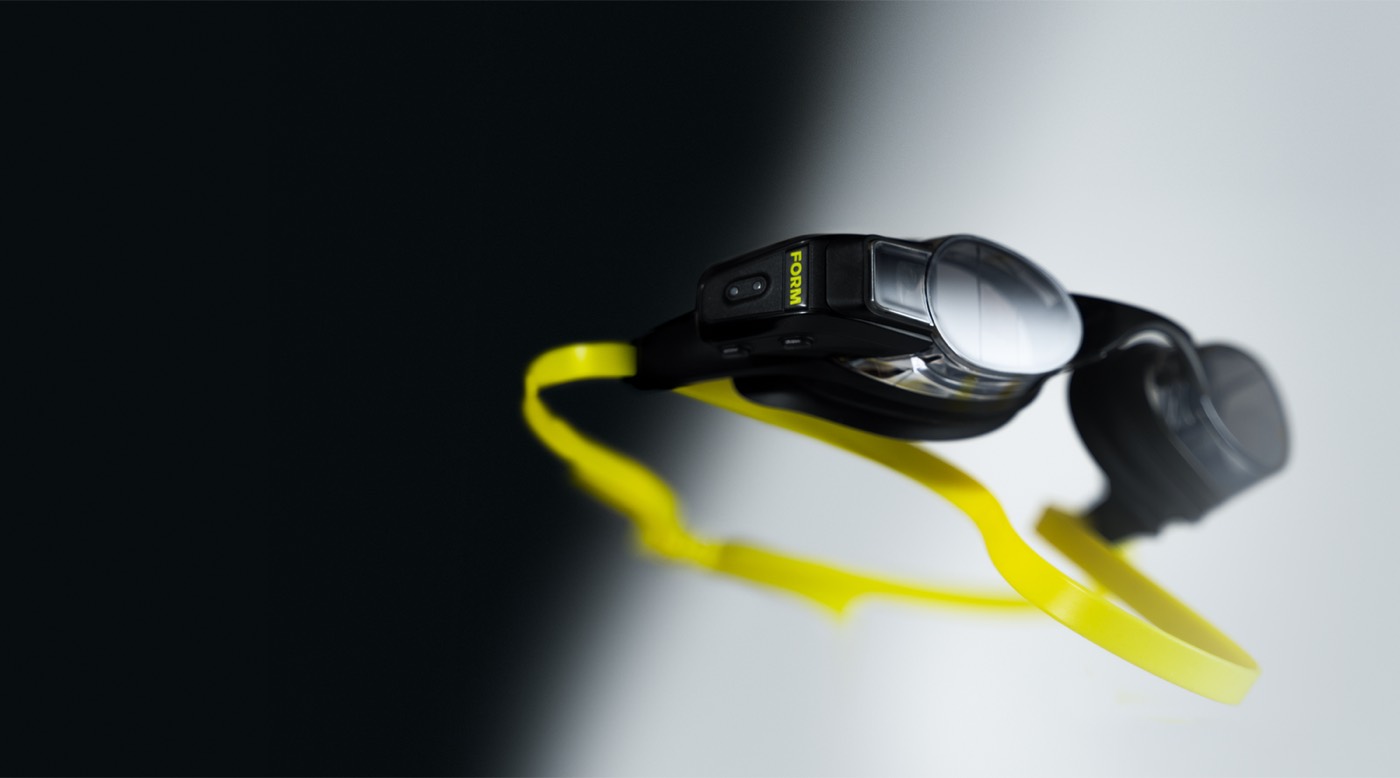
Today there are even smart goggles like the FORM or the FINIS Smart Goggles. They have holographic displays (HUD - Heads Up Display) inserted directly into the lens. While you swim, a laser projects your split times, stroke rate, and heart rate onto your retina. In open water, this means never having to stop to look at your watch. Is it useful? Maybe. But all things considered, I would prefer to invest the same amount in 20 transparent Swedes and have a lifetime supply.
A clarification, while we're talking about money: there is no affiliate link in here, more for arithmetic than for purity of spirit. On a 7 € goggle, the commission is pennies: we could sell a hundred thousand pairs and we wouldn't pay for the connection. If one day we do affiliate marketing, it will be on the custom Magic5 or the FORM with the display in the lens, not on two plastic lenses and a piece of string. The trouble is that we really like those.
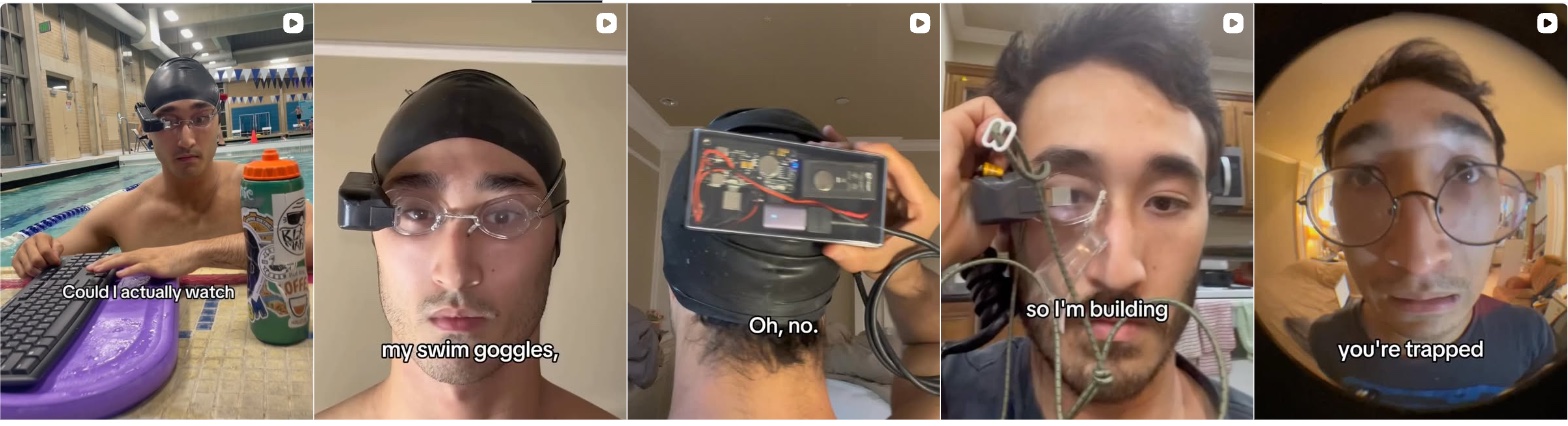
I couldn't close this excursus without mentioning the very fun project by SammyJBuilds.
Go check out his Instagram profile. Sammy is an absolute DIY genius. He is the Michael O'Flanagan of Gen Z. He designs and 3D prints goggle frames in his home garage, models resins, experiments with magnetic gaskets and crazy solutions (and mounts them on Swedish goggles. A detail I appreciate very much).
Perhaps I admit, I have been too biased in my devotion to the Swedes. But there is an ineluctable truth in all this technical evolution. "Bernard of Chartres used to say that we are like dwarfs on the shoulders of giants, so that we can see more things than they can and further, not certainly because of the sharpness of our sight or the height of our body, but because we are lifted and carried high by the stature of the giants." Our giants wore curved glass lenses with which they fished for coral, wooden goggles, motorcycle goggles, and mundane tailor's elastic. It is only thanks to their red eyes that today when we dive, we have the superpower of light refraction and no burning.